


Whitefly Management: Advisory For Farmers - Cotton
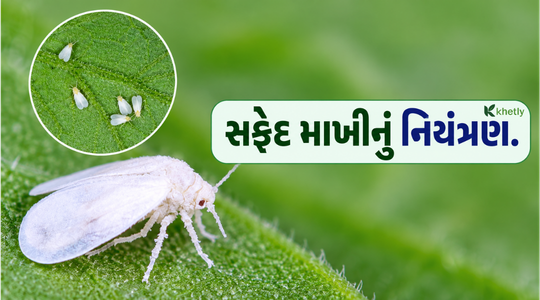
Whitefly Management: Advisory for Farmers
Whitefly is a major sucking pest affecting several crops, particularly cotton and vegetable crops. It feeds on plant sap, weakens the plant, and heavy infestation can reduce crop growth and yield.
1. Advisory by Junagadh Agricultural University (JAU)
For cotton, JAU has recommended the following options for management of sucking pests including whitefly:
Chemical Control
Option 1:
Flonicamid 50 WG – 4 g / 10 litres of water
OR
Option 2:
Dinotefuran 20 SG – 4 g / 10 litres of water
Application schedule:
- Apply the first spray when pest infestation starts.
- If required, apply 2 more sprays at 15-day intervals.
- PHI: Flonicamid – 25 days
- PHI: Dinotefuran – 15 days
This recommendation is from JAU's 21st Combined AGRESCO proceedings for Gujarat cotton.
2. Advisory by ICAR
ICAR recommends an Integrated Pest Management (IPM) approach rather than depending only on chemical pesticides.
A. Regular Monitoring
Check the underside of leaves regularly because whitefly adults and nymphs are commonly found there.
Early detection helps prevent the population from becoming difficult to control.
B. Yellow Sticky Traps
Use:
20 × 15 cm Yellow Sticky Traps – 5 traps/acre
These are particularly useful for monitoring and early detection of adult whiteflies. They should not be considered sufficient by themselves when infestation is already severe.
C. Remove Weeds
Remove weeds from the field and surrounding areas because some weeds can act as alternate hosts for whitefly.
D. Neem-Based Management
ICAR's validated IPM approaches include neem-based products.
One validated strategy used:
Azadirachtin 1500 ppm @ 5 ml/L water
Neem-based products can be particularly useful during early infestation and as part of an IPM programme.
E. Proper Plant Nutrition
Maintain balanced crop nutrition. ICAR's validated IPM strategy also included:
2% Potassium Nitrate foliar spray
along with other IPM practices.
F. Protect Beneficial Insects
Avoid unnecessary insecticide applications because natural predators and parasitoids can help suppress whitefly populations.
G. Use Insecticides Only When Necessary
When the infestation reaches the appropriate management level, use a registered insecticide for the specific crop and pest.
Do not repeatedly use the same active ingredient. Rotate insecticides with different IRAC Mode-of-Action groups to reduce the risk of resistance.
3. Best Practical Strategy for Farmers
Monitor → Yellow Sticky Traps → Weed Control → Neem/Biological Management → Chemical Control When Required → Rotate Mode of Action
Important
Do not spray an insecticide simply because a few whiteflies are visible.
First assess the infestation and crop condition. When chemical control is required, choose a product registered for that particular crop and whitefly, and follow the current label dose and PHI.
Khetly Recommendation
For Gujarat farmers, I would present the message like this:
“Whitefly is becoming a serious problem in many crops. Early monitoring, yellow sticky traps, weed management, protection of beneficial insects and timely use of registered insecticides can help prevent severe infestation. Avoid repeated use of the same insecticide and follow proper Mode-of-Action rotation.”
Important: The JAU Flonicamid and Dinotefuran doses above are specifically for cotton. Do not apply the same dose to other crops without checking the crop-specific registered recommendation.
Source - ICAR and JAU